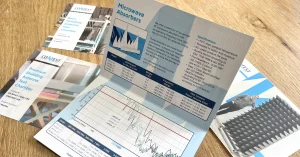
Absorberhype at EuMW 2026
Exhibiting alongside our UK representatives, Melcom Electronics Limited, was a great success. ‘I almost ran out of my Microwave Absorber postcards!’ said Vincent van de Vrie, our on-site Technical Consultant.


Exhibiting alongside our UK representatives, Melcom Electronics Limited, was a great success. ‘I almost ran out of my Microwave Absorber postcards!’ said Vincent van de Vrie, our on-site Technical Consultant.

With the 29th European Microwave Week (EuMW 2026) coming up next week, we celebrate our first anniversary of working with the great team at Melcom Electronics Limited. At last year’s EuMW, they became our exclusive distribution channel for the UK and Ireland within our international reseller network.
Will 2026 finally see the adoption of reverberation testing in the automotive industry? In a series of five posts, our specialists share trends and developments for 2026. This week, Dimitrios Barakos, R&D Engineer at Comtest, explains the delays in 2025.
Dimitrios: “Although the ISO standard for full-vehicle testing was completed some time ago, the necessary ISO-11542-11 update for automotive components has been pushed back. There is a bright side: in 2027, Hyundai Motor Group will likely make the updated ISO standards mandatory for testing their vehicles and motor components. However, that was expected in 2025 and has been delayed, as you know. For 2026, these delays will leave the automotive industry with only half the incentive to embrace reverberation testing.”
When do you see acceptance for reverberation testing in the automotive industry?
Dimitrios Barakos: “The point is that the new norms for full-vehicle testing are not mandatory, and switching from anechoic to reverberation testing is not very popular. Some companies are open to it, and big labs and test houses see the potential of reverberation testing, but for many, it remains an unfamiliar method. At the Comtest R&D department, we continue developing improvements to our reverberation chambers. We have been optimising our current range of stirrers, and we are also working on a new type of stirrer. We keep improving the product to stay ahead of the game.”
In the photo: Dimitrios Barakos holding a patented stirrer prototype.