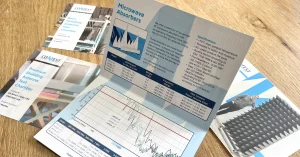
Absorberhype at EuMW 2026
Exhibiting alongside our UK representatives, Melcom Electronics Limited, was a great success. ‘I almost ran out of my Microwave Absorber postcards!’ said Vincent van de Vrie, our on-site Technical Consultant.

Exhibiting alongside our UK representatives, Melcom Electronics Limited, was a great success. ‘I almost ran out of my Microwave Absorber postcards!’ said Vincent van de Vrie, our on-site Technical Consultant.

With the 29th European Microwave Week (EuMW 2026) coming up next week, we celebrate our first anniversary of working with the great team at Melcom Electronics Limited. At last year’s EuMW, they became our exclusive distribution channel for the UK and Ireland within our international reseller network.
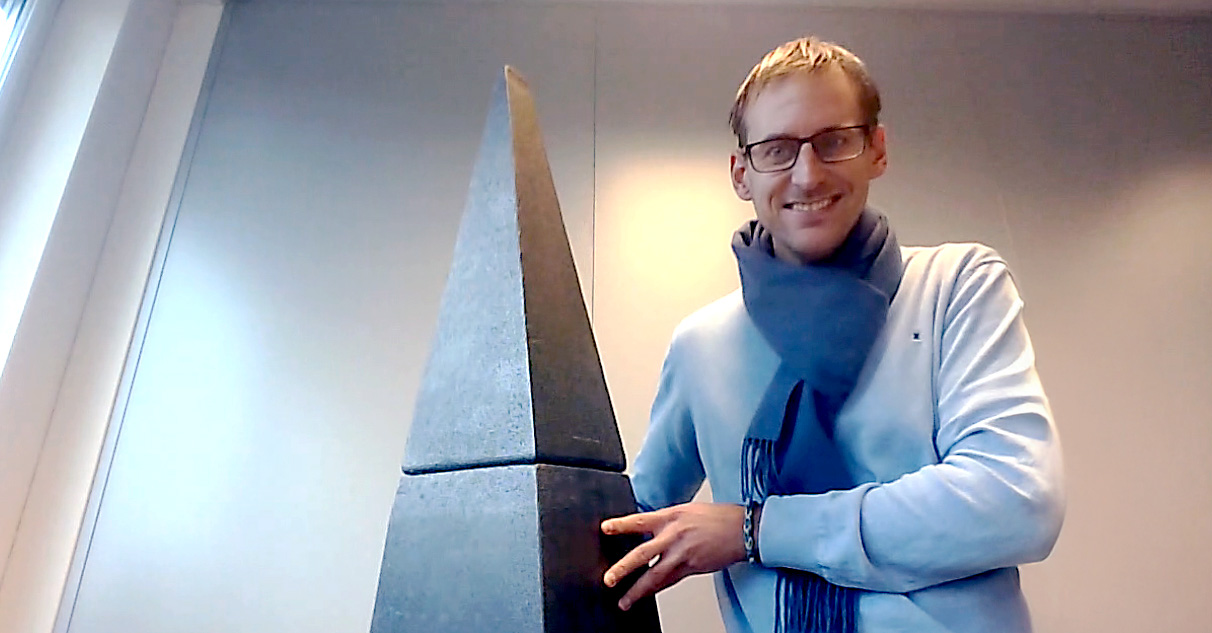
This is Rik de Groot, holding a rare 110 CM absorber. In this post, he explains the correlation between testing frequencies and absorber height. And how tall are the longest absorbers on the market?
Rik de Groot, Managing Director of our sister company, Dutch Microwave Absorber Solutions (DMAS): “The taller the absorber, the lower the frequency you can test with it. We speak of an absorber when the reflectivity is at least -30dB, the so-called start frequency. The tallest absorber we sell is 65CM/ 26”, used for tests starting around 300 MHz, but the one in the photo is 110CM.
We do not sell these anymore since the geometry of the absorber tip has changed (javelin), but for the right application, we’re open to developing a 110cm javelin tip absorber. For example, the tallest absorbers in the market are mainly used to measure AM or FM frequencies to test onboard radio antennas on vehicles.
The downside of large absorbers is that the chamber needs to be bigger, and many clients have limited heights in their buildings. Instead, we focused on developing new, smaller size absorbers such as 65, 45, 30 and 13CM absorbers for testing between frequencies of 450MHz up to 110GHz.”