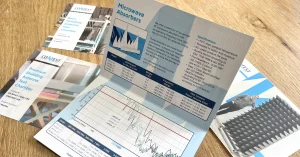
Absorberhype at EuMW 2026
Exhibiting alongside our UK representatives, Melcom Electronics Limited, was a great success. ‘I almost ran out of my Microwave Absorber postcards!’ said Vincent van de Vrie, our on-site Technical Consultant.

Exhibiting alongside our UK representatives, Melcom Electronics Limited, was a great success. ‘I almost ran out of my Microwave Absorber postcards!’ said Vincent van de Vrie, our on-site Technical Consultant.

With the 29th European Microwave Week (EuMW 2026) coming up next week, we celebrate our first anniversary of working with the great team at Melcom Electronics Limited. At last year’s EuMW, they became our exclusive distribution channel for the UK and Ireland within our international reseller network.
How did we succeed in developing a door that meets TEMPEST shielding standards while also being acoustically proof? Over four posts, our specialist will guide you through this journey from concept and prototype, including all the challenges we faced, to the final solution.
‘The first challenge is the shielding effectiveness,’ says Martijn Fokker, Senior CAD Engineer. ‘The design principles for an RF shielded door and an acoustic door are fundamentally different. Acoustic performance requires decoupling structures to minimise sound transfer, whereas RF shielding demands a continuous conductive connection throughout the structure. Balancing these two disciplines was more or less my main design challenge. To tackle the second challenge, I was able to draw on my experience in the maritime sector.’
Our Shielding Consultant, Vincent van de Vrie, highlights this second challenge. Vincent: ‘The door is intended for use in a mobile deployable shield room and must withstand various environmental conditions, such as heat, cold, and high humidity. Typically, our chambers are constructed in controlled environments like OEM buildings, universities, and test houses. These are made of galvanised plate steel, which is not ideal for outdoor use, so Martijn suggested using marine-grade stainless steel.’
Our team is currently testing our prototype, and in a second post, we will delve into the challenges of integrating sound transmission classification into the design.
For more details on our Tempest Shielding solutions, contact our specialist Vincent van de Vrie.
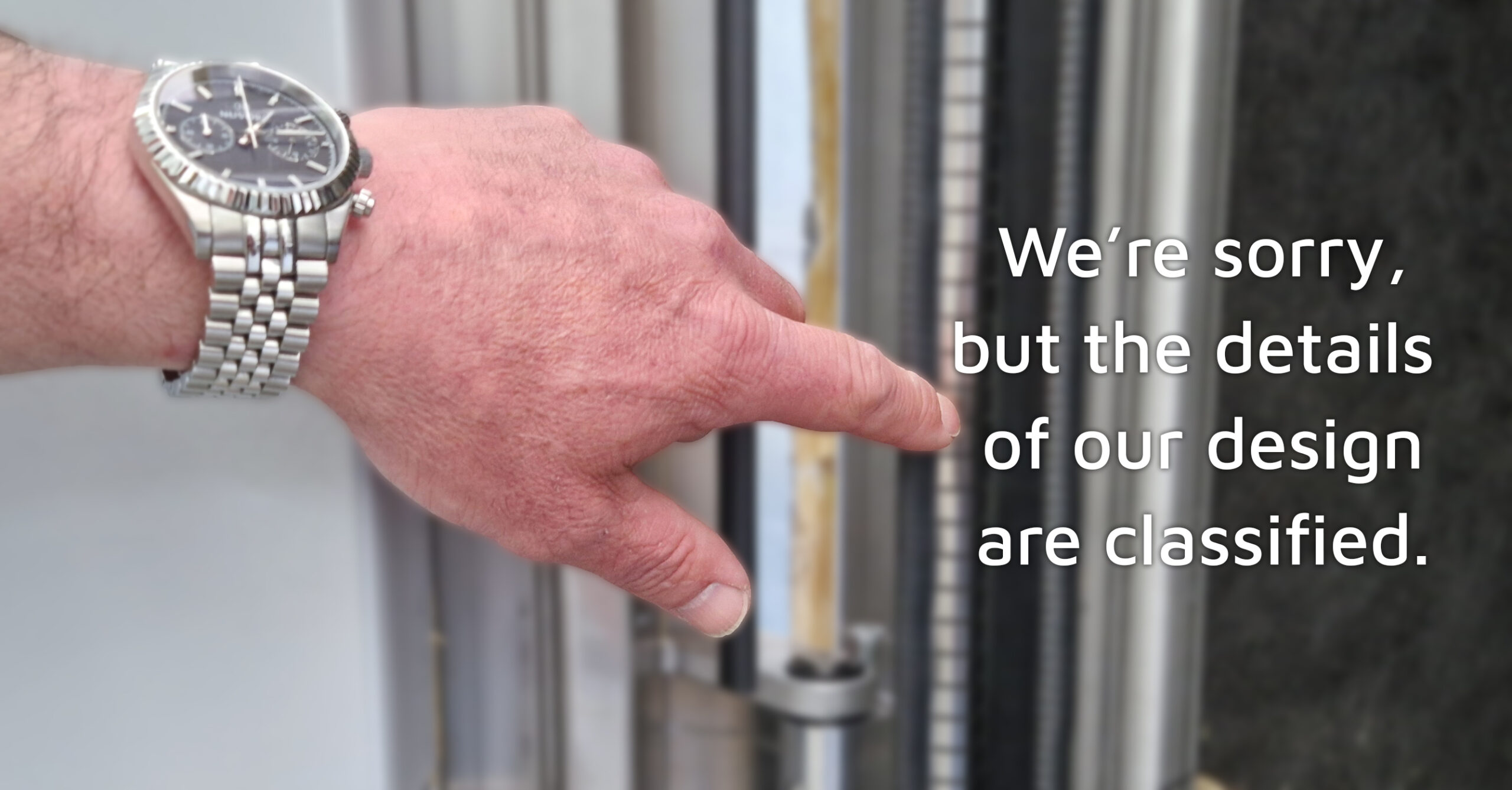
In the photo, Martijn is pointing out two rows of contact finger stocks on the door with the EPDM seal in between for acoustic damping.